

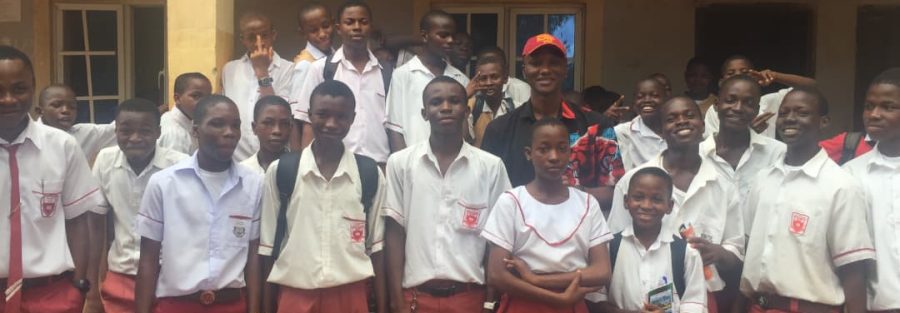
Societies are shaped by the voices they choose to amplify. I came to this realisation after spending a month teaching climate change at Government Day Secondary School, G.R.A., Enugu, under the Enugu State Growing Green Generation Pilot Project—an initiative of the Office of the Senior Adviser to the Governor on Climate Change and Sustainable Development, in collaboration with the Office of the First Lady, the Ministries of Environment and Education, and supported by the UNICEF Enugu Field Office.
Shortly after my experience, Nigeria’s social media space erupted with debates over the so-called “Olodo Uprising.” Beneath the humour and memes lay a more profound national conversation about knowledge, competence, and the consequences of poor education. For me, the debate also offered a powerful lens through which to reflect on my experience teaching climate science.
I arrived in the classroom expecting to teach climate change, but found myself competing with voices that had been teaching long before I arrived: social media, family conversations, popular culture, etc. Some of what the students believed was accurate, but much of it was rooted in myths, misconceptions, and half-truths. My role quickly became less about introducing new knowledge and more about helping students distinguish facts from misinformation.
The lesson from the recent “Olodo Uprising” debate, therefore, is not simply about who is intelligent, but about whose voices shape our collective future. At a time when climate change demands informed public engagement, the debate reminds us of several reasons why evidence-based voices matter. This is not about silencing disagreement or alternative opinions; it is about ensuring that public debate is anchored in facts rather than falsehoods.
Firstly, without credible voices, misinformation fills the gap. The United Nations has repeatedly warned that misinformation and disinformation have become among the defining global risks of the twenty-first century because they undermine our ability to respond collectively to crises. The COVID-19 pandemic taught us a painful lesson that misinformation can be just as dangerous as the crisis itself. False claims about miracle cures, vaccines, and unproven treatments spread rapidly, creating confusion, undermining trust, and costing lives.
Climate change faces a similar test. While outright climate denial persists, more subtle forms of misinformation have become increasingly common: some commentators claim renewable energy cannot work, exaggerate its costs while ignoring its benefits, or portray climate change as a Western conspiracy designed to prevent Africa’s development. These narratives erode public trust, discourage support for practical climate solutions, and ultimately delay meaningful action.
Secondly, understanding climate change requires interpreting scientific evidence that most people cannot easily verify for themselves and depend on trusted interpreters. If these interpreters are less informed but louder, people lose reliable guidance and are susceptible to climate myths.
Thirdly, misconceptions can shape behaviour, with real world consequences for how we choose to act. Communities may oppose renewable energy projects based on false claims, farmers may ignore climate-smart agricultural practices, or families may fail to respond appropriately to disaster preparedness warnings because they distrust scientific advice.
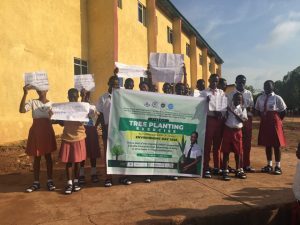 Lastly, students today will become tomorrow’s decision makers. What they believe today will shape future choices. If the voices students hear every day ridicule climate science, dismiss environmental responsibility, or reward ignorance, climate education will always be fighting an uphill battle. If we fail to intentionally educate young people about climate change today, we may inadvertently create an “Olodo Uprising” in the green economy: a generation excluded from emerging opportunities because they were never equipped with the knowledge to participate. Amplifying evidence-based voices therefore is an investment in the quality of future leadership.
If we are serious about tackling climate change, we must invest in the people and institutions that communicate evidence with credibility and integrity: scientists, teachers, journalists, and climate communicators.
Charles Dickens in “Hard Times” once mocked an educational philosophy that demanded, “Teach these boys and girls nothing but facts. Facts alone are wanted in life.” He was right to question the idea that facts alone make us human. Yet he could hardly have imagined a century in which facts themselves would become contested. Today, Climate science does not suffer from a lack of evidence, but from the growing influence of louder, more persuasive ignorant voices that dismiss or distort it. Facts matter, but they rarely speak for themselves. They require credible messengers whom people trust. The challenge before us, therefore, is not simply to teach facts, but to cultivate trust.
The Olodo Uprising should remind us that the real question is not who speaks the loudest, but whose voices we choose to elevate. Our collective future will depend on that choice.
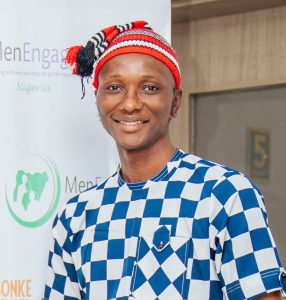
Chukwuebuka Ibezim
Climate Education Champion