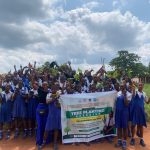


Sometimes the most important lesson is not the one you planned to teach, it is the one the experience teaches you; That was my full circle experience with Growing Green Generation Pilot Project, an initiative of the Office of the Special Adviser to the Governor of Enugu State on Climate Policy and Sustainable Development, in partnership with the office of the First lady, Enugu State Ministry of Education, and the Ministry of Environment, with support from UNICEF Enugu Field Office
Before entering the classroom at Annunciation Secondary school, Enugu, I had wondered how the experiences of the students have shaped their perception about climate change – Do they know what climate change is, and would they have seen it as something that affects foreigners and rich people far from here?
This engagementrevealed the immense potential of Nigeria’s young people, the barriers that prevent this potential from being fully realised, and why the conversation about climate action cannot be separated from the conversation about the schools and environment where children learn. Despite decades of negotiating climate action in beautiful conference halls, the classrooms – where lasting environmental leadership can truly be cultivated seems to have been neglected.
Above all, the students’ remained remarkably curious during the interactive session that was engaging and the students became eager to speak and learn.
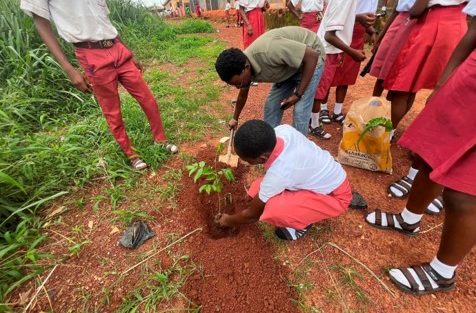
The project was more than a series of lessons, tt was about transforming knowledge into action. One of the most memorable activities was tree planting. Watching students carefully plant and water young trees reminded me that climate education is not only about teaching facts; it is about nurturing a sense of responsibility. Every tree planted was a living statement: that individuals, no matter how young, can contribute meaningfully to protecting the environment.
Equally impactful was the plastic bottle collection drive for recycling. Rather than treating plastic waste as ordinary litter, students began to see it as an environmental challenge with real, practical solutions. Watching them actively participate and make the connection between everyday habits and environmental consequences was one of the most encouraging moments of the experience.
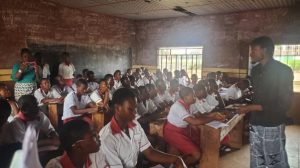
The Growing Green Generation Pilot Project demonstrates what is possible when students are given opportunities to engage with real-world challenges. But programmes like this should inspire the everyday learning experiences, not compensate for what is missing. If we expect young people to become innovators, problem-solvers and environmental stewards, we must provide learning environments that reflect these expectations
To strengthen programmes like these, several steps are worth considering. Climate education should be formally integrated into the school curriculum, making environmental awareness part of everyday learning rather than a periodic visit. Government agencies, private organisations, and development partners should collaborate to provide smart classrooms, reliable electricity, digital teaching tools and teacher capacity development. Learning should move beyond memorisation to inquiry, collaboration and hands-on problem-solving. The school authorities should model sustainability through solar energy, tree planting, recycling initiatives and greener learning spaces, allowing students to experience the values of what they are being taught.
My time at Annunciation Secondary School reaffirmed something far greater than the importance of climate education. It showed me that Nigeria’s young people are ready to learn, innovate and lead; but only if we create learning environments that allow them to do so. The pure zeal I saw in these students has proven that young people are not indifferent to environmental issues, they simply need to be empowered to play their part. If we are intentional about building a climate resilient Enugu and Nigeria, we must continue to invest in these programmes and infrastructure that empower and teach students to become environmental stewards. The seeds we planted both in the soil and in the minds of these students have the potential to grow into a generation that sees sustainability not only as a mere choice but as a shared responsibility.
Chukwuma Raaluchukwu
Climate Education Champion